The Best Disaster Films Ever Made, Ranked
Disaster movies work best when the spectacle has something human trapped underneath it

Disaster movies work best when the spectacle has something human trapped underneath it. A collapsing building or planet-killing asteroid can get you into the cinema, but the films you remember are usually about people making terrible decisions while everything around them gets worse.
And right now, the genre is worth revisiting because its best entries still make modern effects-heavy blockbusters look oddly tame. These are the disaster films that understood destruction is only half the fun.
10 to 7: When Chaos Is the Main Attraction
10. The Day After Tomorrow (2004)
Scientifically convincing? Absolutely not. Extremely watchable? Yes.
Roland Emmerich freezes New York, drops tornadoes into Los Angeles and turns climate catastrophe into a two-hour survival ride. The film made approximately $550 million worldwide, proving audiences were perfectly happy to overlook its shaky science when the destruction looked this good.
9. Deep Impact (1998)
Released the same year as Armageddon, Deep Impact takes the less frantic route. A comet is heading toward Earth, humanity knows what's coming, and much of the film focuses on how ordinary people react to an approaching deadline.
That restraint gives it a different kind of punch. The enormous tidal-wave sequence delivers the required spectacle, but Téa Leoni's final storyline is what tends to stick with you.
8. The Poseidon Adventure (1972)
A luxury liner gets flipped upside down by a massive wave on New Year's Eve, forcing survivors to climb through the inverted ship toward the hull.
It's such a clean premise that filmmakers have repeatedly returned to it, but the 1972 version remains the one to beat. Gene Hackman gives the movie its furious momentum, while the practical sets make every flooded corridor and vertical shaft feel genuinely dangerous.
7. Twister (1996)
Tornado scientists chase tornadoes is all the plot Twister really needs. Helen Hunt and Bill Paxton sell the rest.
Released in 1996, it became one of that year's biggest hits, earning approximately $495 million worldwide. Its flying cows became the joke everyone remembered, but the roaring sound design and violent unpredictability of its storms are why the film still works.
6 to 4: The Ones With More Than Spectacle
6. Contagion (2011)
Steven Soderbergh's pandemic thriller became uncomfortable viewing in 2020 for obvious reasons. Nearly a decade earlier, it had already depicted overwhelmed hospitals, misinformation, supply shortages and frantic attempts to develop a vaccine.
The cast is stacked, including Matt Damon, Kate Winslet, Laurence Fishburne and Gwyneth Paltrow, but the film rarely behaves like a conventional star vehicle. Its clinical approach makes the disaster feel larger because nobody gets to dominate it.
5. The Impossible (2012)
Based on one family's experience during the 2004 Indian Ocean tsunami, The Impossible puts Naomi Watts and Ewan McGregor in a story where survival feels painfully physical.
The tsunami sequence is brutal because director J.A. Bayona keeps you close to the people being swept away rather than treating the wave as visual wallpaper. Watts received an Academy Award nomination for Best Actress, but young Tom Holland is just as crucial to the film's emotional weight.
4. Titanic (1997)
Yes, Titanic is a romance. It's also one of the most effective disaster films ever made.
James Cameron spends more than half the movie teaching you the geography of the ship and introducing the people aboard it. So when the iceberg hits, every staircase, corridor and deck suddenly matters. The film became the first movie to pass $1 billion at the worldwide box office and won 11 Academy Awards, including Best Picture.
3 to 1: Disaster Movies at Their Best
3. The Towering Inferno (1974)
The 1970s were the golden age of disaster movies, and The Towering Inferno might be the purest example of the formula.
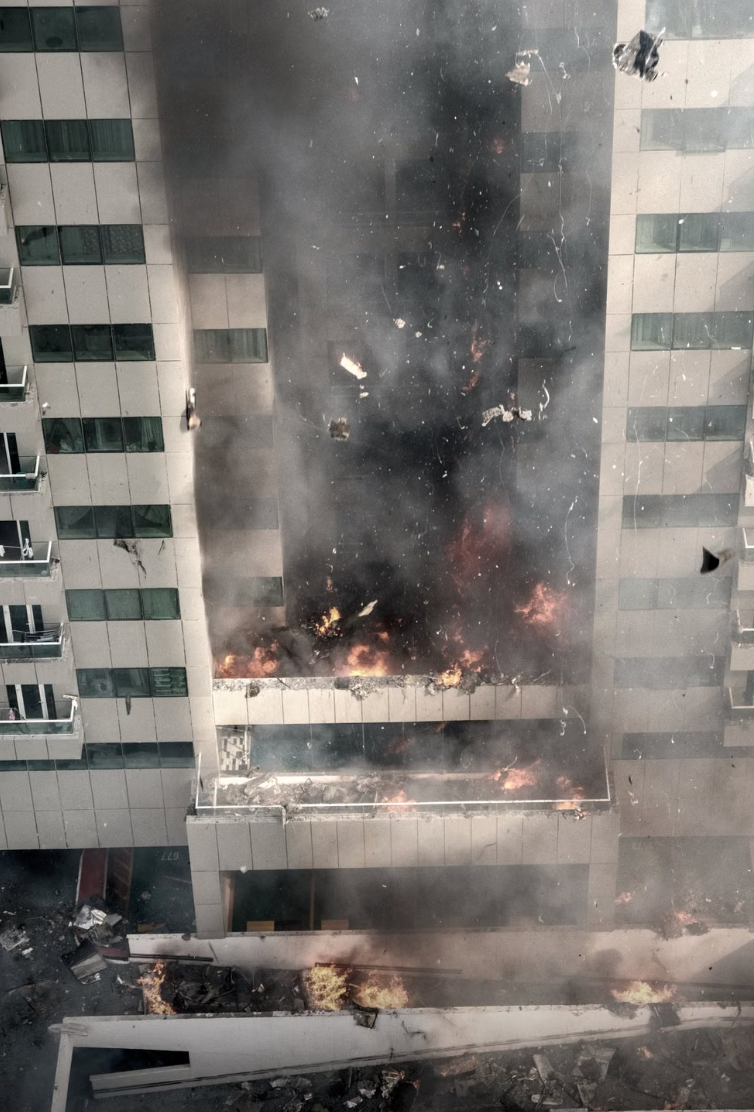
Paul Newman and Steve McQueen lead an enormous cast trapped inside a San Francisco skyscraper during a catastrophic fire. The film understands something many later blockbusters forgot: anticipation matters. You watch small mistakes and ignored warnings accumulate until the building becomes a trap, which makes the eventual chaos feel earned.
2. Apollo 13 (1995)
Ron Howard barely needs to exaggerate anything. The real Apollo 13 mission already came with an oxygen-tank explosion, dwindling resources and three astronauts trying to get home from roughly 200,000 miles away.
Tom Hanks anchors the film as commander Jim Lovell, and the movie turns calculations, carbon-dioxide filters and spacecraft procedures into gripping drama. Its famous "Houston, we have a problem" line slightly alters Lovell's actual wording, but it became one of cinema's most recognisable quotations anyway.
1. The Poseidon Adventure? Not quite. It's The Impossible? Still no. The winner is Titanic.
Actually, no tricks needed: Titanic takes the top spot.
Cameron's film belongs at number one because the disaster isn't detachable from everything that comes before it. You understand the ship, the class divisions aboard it and the characters who'll eventually have to navigate its destruction. When the stern rises vertically into the night, you're watching dozens of earlier details suddenly become life-or-death problems.
And despite decades of imitation, the sinking still has frightening physical weight. Water doesn't merely appear; it punches through doors, fills rooms and steadily removes every possible escape.
Why You Should Care
You don't need to love disaster movies to enjoy the best ones. At their strongest, they're pressure cookers that strip characters down to simple choices: help someone, save yourself, follow the plan or ignore it.
They're also a reminder that bigger effects don't automatically create bigger tension. A convincing person trapped behind one locked door can be more stressful than an entire digitally destroyed city.
What to Watch Next
If you've already seen the heavy hitters, start with Train to Busan (2016), which combines a zombie outbreak with the confined geography of a speeding train. It's fast, nasty and unusually good at making you care about the passengers before putting them in danger.
Then try The Wave (2015), a Norwegian disaster thriller about a landslide-triggered tsunami threatening a small fjord community. Its smaller scale makes the destruction feel personal.
And for something older, watch A Night to Remember (1958). Its restrained account of the Titanic disaster makes a fascinating companion to Cameron's version. The technology changed dramatically in the 39 years between them, but the basic source of tension didn't: people know the ship is sinking, and there aren't enough lifeboats.
That's the secret the best disaster films understand. The explosion gets your attention. The people who can't escape it are what keep you watching.

Craig Anderson
Author at SofaBreak — writing on media news and everyday curiosities.