10 Deep Ocean Facts That Will Make You Question Reality
The deep sea doesn’t feel like another place on Earth. It feels like Earth forgot to tell us about a second planet.

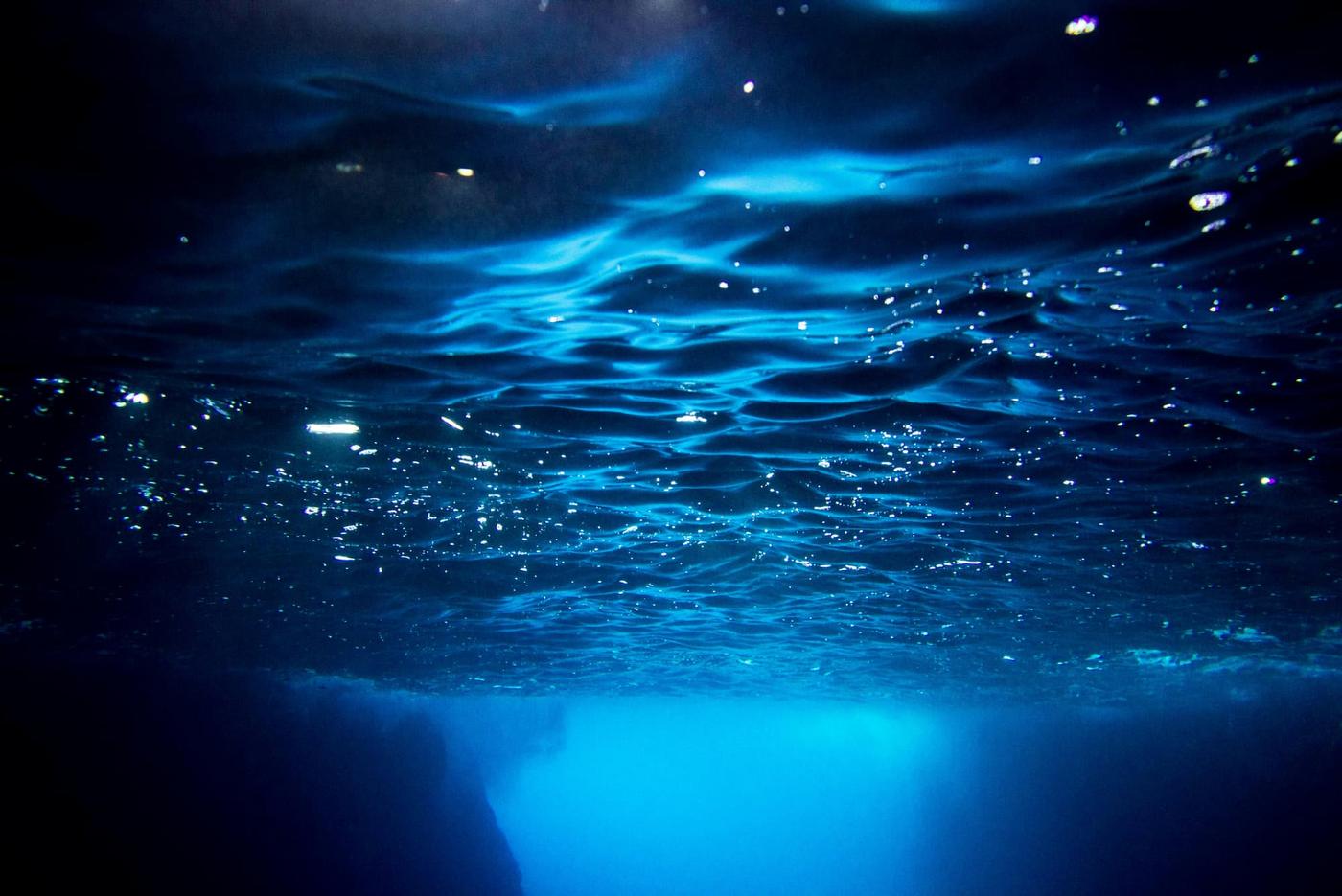
Most of the planet sits under water so dark, cold, and pressurized that your brain almost refuses to picture it. Down there, lakes sit inside the ocean, animals make their own headlights, and boiling-hot water somehow doesn’t boil. The deep sea doesn’t feel like another place on Earth. It feels like Earth forgot to tell us about a second planet.
The deep ocean starts where sunlight gives up By the time you reach about 1,000 meters, sunlight has completely vanished, and photosynthesis can’t happen. That means no seaweed forests, no sunny coral gardens, no normal food chain. Life has to improvise. Animals eat falling scraps, hunt in darkness, or gather around chemical-rich vents. Imagine a whole world running without daylight, like a city powered by crumbs and strange chemistry.
The pressure would crush ordinary objects fast Ocean pressure rises by about one atmosphere every 10 meters. At the average ocean depth, the seafloor feels hundreds of times more pressure than the surface. In the deepest trenches, that number climbs past 1,000 times. Humans need thick submersibles to survive it, but many deep-sea animals just live there, soft-bodied and weirdly suited to a place that would flatten our best camping gear.
The deepest point could swallow Mount Everest Challenger Deep, in the Mariana Trench, drops to about 10,935 meters. Mount Everest rises about 8,849 meters above sea level, so the deepest ocean point still leaves roughly two kilometers of water above the mountain’s peak. That scale feels fake until you picture Everest sitting underwater, not even close to breaking the surface. The ocean doesn’t just have depth. It has vertical silence.
Some deep-sea vents shoot water hotter than your oven Hydrothermal vents can release fluid hotter than 400°C, or 750°F. Under normal pressure, water at that temperature would turn into steam. But deep-ocean pressure keeps it liquid, so the seafloor gets these black, smoky towers blasting mineral-rich superheated water into near-freezing darkness. Even better, entire communities of life cluster around them, powered by chemistry instead of sunlight.
There are underwater lakes with shorelines Brine pools form when extremely salty water sinks into seafloor depressions and refuses to mix with the seawater above. The result looks like a lake at the bottom of the ocean, complete with a visible surface and slow waves. Some creatures hang around the edges like beachgoers from a nightmare. Fall into one, though, and the salt and low oxygen can turn deadly fast.
Most deep-sea animals glow Bioluminescence dominates the deep. NOAA estimates that as many as 90% of deep-ocean creatures produce light, while other experts put many deep-sea animals in the glowing club too. They use it to attract prey, confuse predators, hide their shape, or signal to others. Down there, darkness doesn’t mean blackness. It means flashes, pulses, and living neon drifting through water no sunbeam can reach.
The deep sea gets “snow” every day Marine snow sounds cute until you learn what it contains. Tiny bits of dead animals, waste, mucus, and other organic leftovers drift down from the upper ocean like a slow, gross blizzard. For many deep-sea creatures, this falling debris forms the main buffet. Somewhere in total darkness, an animal you’ve never heard of may survive because a microscopic poop flake fell from hundreds of meters above.
Giant squid were almost myths for most of history People talked about giant squid for ages, but live footage came shockingly late. In 2019, scientists filmed a giant squid about 3 meters long in U.S. waters, only the second time anyone had filmed one alive anywhere. That’s not because the animal suddenly appeared. It had been there, slipping through deep water while humans built cities, satellites, and smartphones without getting a decent look.
The midnight zone has its own hidden traffic The bathypelagic zone, often called the midnight zone, stretches roughly from 1,000 to 4,000 meters. No sunlight reaches it, but it doesn’t sit empty. Animals drift, hunt, flash, and wait. Some creatures above it migrate upward at night and downward by day, creating one of the biggest daily movements of life on Earth. From the surface, you’d never know a vertical rush hour runs below you.
We’ve explored shockingly little of it The deep ocean covers a huge share of the planet, yet it remains one of the hardest habitats to study. Darkness, pressure, distance, and cost all gang up on researchers. That means scientists still keep finding new species, new behaviors, and new seafloor features. The weirdest part isn’t that the deep sea contains strange things. The weirdest part is how much of the strangeness still waits off-camera.
The deep ocean reminds you that Earth still has locked rooms, and some of them glow, boil, and snow in total darkness. Share this with someone who thinks space is the only place where reality gets weird.

James Roberts
Author at SofaBreak — writing on facts and everyday curiosities.