10 Desert Facts That Are the Opposite of What You Expect
Deserts have a reputation for being hot, empty places where almost nothing happens. That picture falls apart fast once you look closer

Deserts have a reputation for being hot, empty places where almost nothing happens. That picture falls apart fast once you look closer. Some deserts freeze, some bloom with millions of flowers, and one of the driest places on Earth sits beneath a thick sheet of ice.
Where the Usual Desert Rules Break
1. Antarctica Is the Largest Desert on Earth
Forget endless sand dunes. The biggest desert on the planet is Antarctica, covering roughly 14 million square kilometers. A desert gets its name from how little precipitation it receives, not how hot it gets, and Antarctica’s interior receives very little moisture. Most of its surface just happens to sit beneath ice. So yes, penguins live in a desert, and the Sahara doesn’t even come close in overall size.
2. Some Deserts Get Covered in Snow
You can bake under desert sunshine during the day and still wake up to frost, or even snow. Deserts often have dry air and few clouds, so heat escapes quickly after sunset. The Sahara has recorded snowfall, while high-altitude deserts regularly drop below freezing. Mongolia’s Gobi Desert takes this much further: winter temperatures can plunge below minus 30°C. Your mental image of permanent desert heat needs a winter coat.
3. Most Deserts Aren’t Giant Seas of Sand
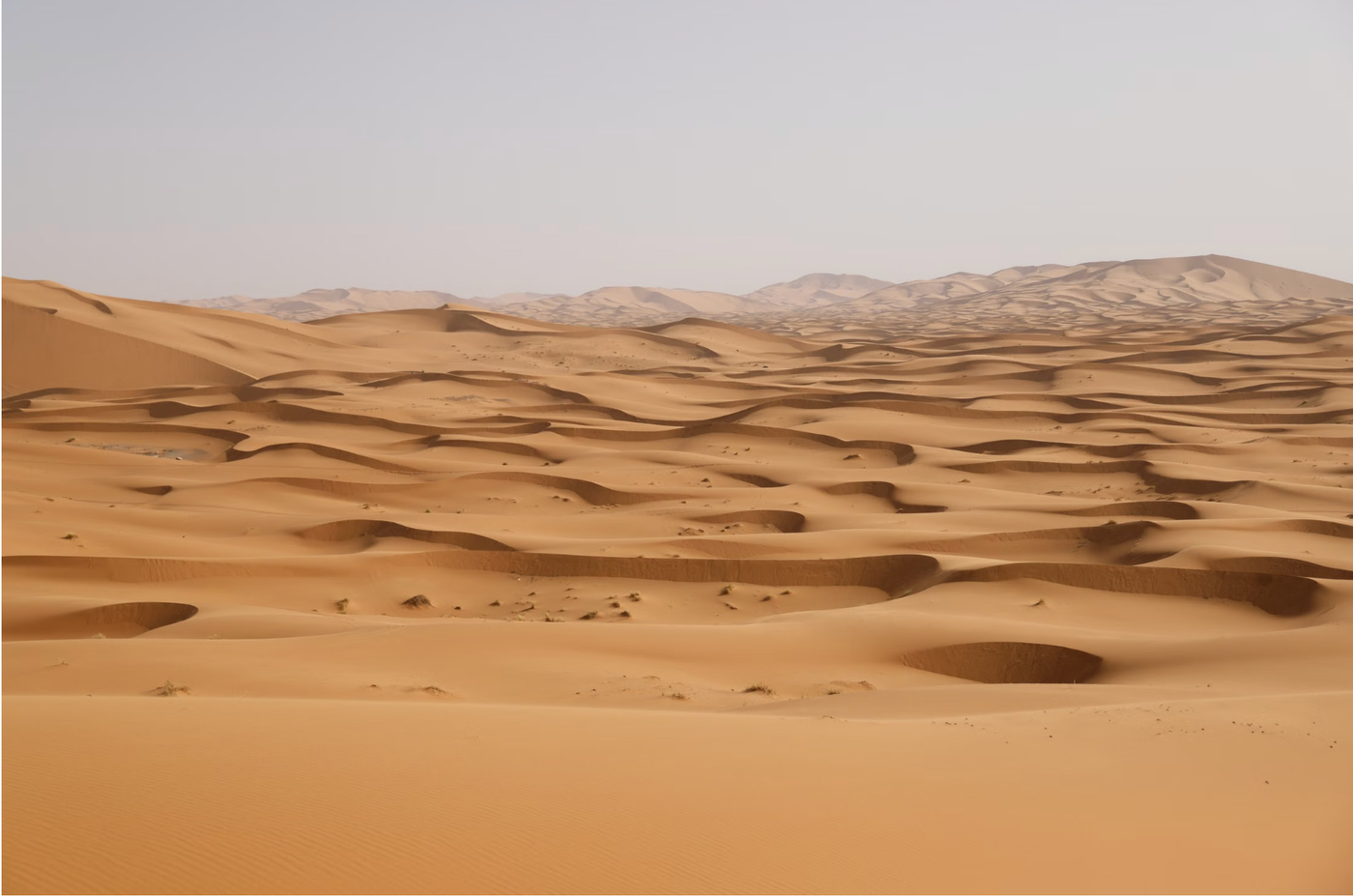
Sand dunes dominate movies because they look spectacular, but they cover only a fraction of the world’s desert terrain. Huge areas consist of bare rock, gravel plains, mountains, salt flats and hard-packed earth. Even the Sahara contains enormous rocky plateaus and stony landscapes. Some stretches look less like Dune and more like another planet. Those famous rolling dunes are real, but they’re far from the standard desert floor.
Life Is Doing Better Than You Think
4. Deserts Can Suddenly Explode With Flowers
A landscape can look completely dead for years, then rain arrives and everything changes. Seeds from desert plants can sit dormant in the soil, waiting for the right combination of water and temperature. When conditions line up, places such as Chile’s Atacama Desert can erupt into enormous carpets of pink, purple and white flowers. The display may last only weeks, making a supposedly lifeless desert look like someone switched ecosystems overnight.
5. Some Desert Animals Barely Need to Drink
Finding a watering hole isn’t always part of the plan. Kangaroo rats in North American deserts can survive without regularly drinking liquid water, getting much of the moisture they need from seeds and from water produced during metabolism. Their kidneys conserve water extremely efficiently, and they spend hot days underground. Even their nasal passages help reduce moisture loss. For an animal living somewhere brutally dry, wasting a drop simply isn’t an option.
6. A Desert Can Be Full of Water Underground
The surface may look bone-dry while enormous reserves sit beneath your feet. Parts of the Sahara lie above major groundwater systems stored in porous rock, including ancient water that fell as rain thousands of years ago when the region had a much wetter climate. Wells and oases can tap these hidden reserves. So that classic desert oasis isn’t necessarily a random puddle. It can be a tiny window into a vast underground supply.
The Landscape Has a Few Tricks Left
7. Sand Dunes Can Actually Sing
Walk across the right dune and the ground can produce a deep hum, boom or drone loud enough to sound mechanical. Scientists call the phenomenon booming sand, and it happens when huge numbers of similarly sized grains slide together down certain dry dunes. The vibration can continue for several seconds and carry across the landscape. Marco Polo even described strange desert sounds centuries ago. Turns out he wasn’t necessarily imagining things.
8. Deserts Can Flood With Terrifying Speed
Dry ground doesn’t mean you’re safe from drowning. Desert soil and rock often absorb heavy rain poorly, so sudden storms can send water racing into gullies and narrow canyons. Flash floods may strike areas where hardly any rain fell directly overhead because the storm happened farther upstream. A completely dry channel can turn into a violent river in minutes. In some deserts, water becomes most dangerous precisely because you rarely see it.
9. The Sahara Used to Be Green
Around 10,000 years ago, large parts of today’s Sahara looked radically different. Lakes, rivers and grasslands supported fish, crocodiles, hippos and human communities across areas that now receive almost no rain. Changes in Earth’s orbit altered African monsoon patterns, and the region gradually became much drier. Rock art still preserves images of animals that seem wildly out of place there today. The world’s iconic hot desert once had a much greener identity.
Even the Sand Isn’t What It Seems
10. Desert Sand Isn’t Great for Making Concrete
You’d think countries surrounded by desert have an unlimited supply of construction material. There’s a catch. Wind tumbles desert sand for ages, making many grains too smooth and rounded to bind as effectively in standard concrete mixtures. Builders generally prefer rougher, more angular sand from rivers, pits or crushed rock. That means some desert-rich countries still need suitable construction sand from elsewhere. Having billions of tonnes of sand doesn’t mean you have the right sand.
Deserts look simple from a distance, but almost every stereotype about them comes with an exception hiding somewhere. Share this with someone who still thinks a desert is just sand, sunshine and a lonely cactus.

Devon Walker
Author at SofaBreak — writing on facts and everyday curiosities.