10 Facts About Antarctica That Make It the Strangest Place on Earth
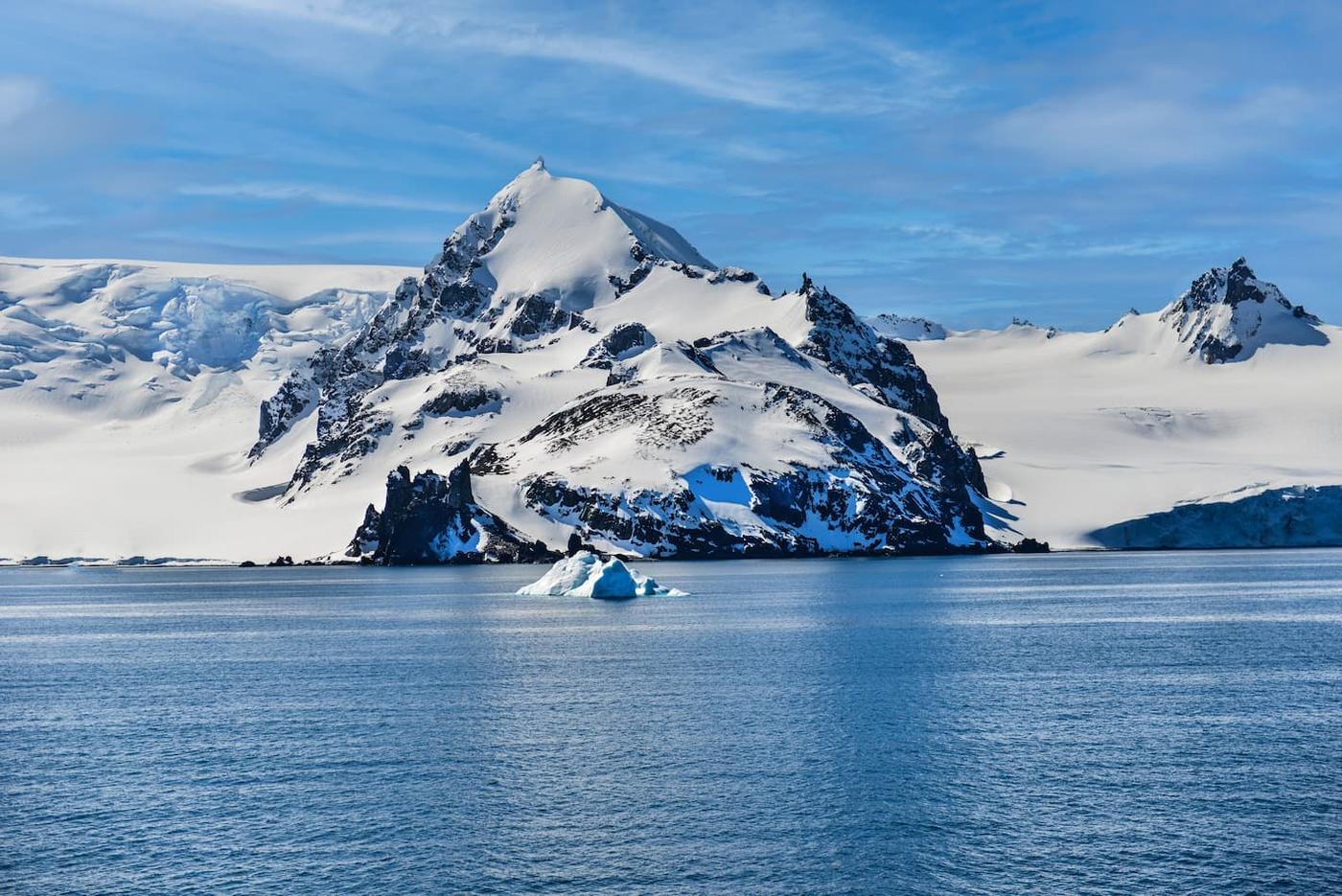
Antarctica gets weirder the closer you look. Beneath all that familiar white scenery, you’ll find a place with bleeding glaciers, lakes buried under kilometers of ice, and a volcano where molten rock still bubbles away.

The Landscape Barely Plays by Earth’s Rules
1. Antarctica is the world’s largest desert
You probably picture deserts as hot, sandy places with camels wandering around. But a desert depends on how little precipitation it gets, not how hot it feels. Antarctica receives so little rain or snow that scientists classify it as a polar desert, and it’s the biggest desert on Earth. Some interior areas get less precipitation than the Sahara. The difference is that Antarctica keeps almost everything that does fall because temperatures rarely let it melt.
2. There’s a waterfall that looks like blood
At the edge of Taylor Glacier, a stream of deep red water spills across the ice, creating something that looks straight out of a horror movie. It’s called Blood Falls, and the color comes from iron-rich salty water that turns rusty red when it reaches oxygen. The water originates beneath the glacier, where microbes survive without sunlight. So yes, one of Antarctica’s creepiest landmarks also hides an isolated microbial community under the ice.
3. Antarctica has an active volcano
Ice and fire share the same continent. Mount Erebus, on Ross Island, ranks among Earth’s southernmost active volcanoes and rises nearly 3,800 meters above sea level. Even stranger, its summit crater contains a long-lived lava lake, a rare feature found at only a handful of volcanoes worldwide. While much of Antarctica sits locked beneath ice, Erebus keeps releasing volcanic gases and maintaining a pool of molten rock. The contrast feels almost unfairly dramatic.
Under the Ice, Things Get Stranger
4. Hundreds of lakes sit beneath the ice sheet
Antarctica looks frozen solid from above, but water hides far below the surface. Scientists have identified hundreds of subglacial lakes trapped beneath the ice sheet, including Lake Vostok, one of the largest. It sits under roughly four kilometers of ice and may have remained isolated for millions of years. Pressure and heat from below help keep the water liquid. Researchers care because these buried lakes could contain microbial life adapted to conditions found nowhere else.
5. Antarctica holds most of Earth’s fresh water
If you want to know where the planet keeps its biggest freshwater stash, look south. The Antarctic ice sheet contains roughly 90 percent of Earth’s ice and around 70 percent of its fresh water. That’s an absurd amount sitting on one continent. If all Antarctic ice melted, global sea levels would rise by roughly 58 meters. Coastal maps would need a serious rewrite, which makes this remote sheet of ice much more connected to your world than it looks.
6. Some parts may not have seen rain for millions of years
The McMurdo Dry Valleys barely resemble the Antarctica you see in documentaries. Mountains block much of the ice from flowing into them, while fierce, dry winds strip away moisture and snow. Some areas rank among the driest places on Earth and may have avoided significant precipitation for millions of years. You’ll find exposed rock, dusty soil and almost no visible life. Scientists study the valleys partly because their brutal conditions resemble environments humans might encounter on Mars.
Antarctica Gets Weird Above Ground Too
7. The continent has no official time zone
Time gets awkward when every line of longitude eventually meets at the South Pole. Antarctica has no single official time zone, so research stations generally choose whatever clock makes practical sense. Some follow the time zone of the country that operates them. Others use the time of the place that supplies them. At the Amundsen-Scott South Pole Station, for example, crews use New Zealand time because flights commonly connect through Christchurch. Your watch becomes a logistical decision.
8. The sun can disappear for months
Near the South Pole, the sun rises and sets only once each year. It climbs above the horizon around September and stays up for roughly six months, circling the sky instead of rising and setting every day. Then it disappears for another six months. That means researchers can experience one extremely long “day” followed by one extremely long “night.” Your normal cues for sleeping, eating and knowing whether 3 a.m. feels like 3 a.m. suddenly become pretty useless.
9. Antarctica has no native land mammals, reptiles or amphibians
Penguins get all the publicity, but Antarctica’s land wildlife is far thinner than you might expect. You won’t find native terrestrial mammals, reptiles or amphibians roaming the continent. Most of its famous animals, including seals and penguins, depend heavily on the ocean for food. On land, some of Antarctica’s toughest permanent residents are tiny invertebrates such as mites, springtails and nematodes. One of Earth’s largest continents has a terrestrial food web dominated by creatures you could easily miss.
One Last Detail That Sounds Made Up
10. Antarctica has its own ATM
Even at the bottom of the world, someone eventually needs cash. McMurdo Station has hosted automated teller machines for residents and workers, making them among the most southerly ATMs on Earth. The machines dispense U.S. dollars, although Antarctica itself has no official currency and no permanent citizen population. Maintaining an ATM somewhere this remote sounds ridiculous until you remember that hundreds of people can live at McMurdo during the busy summer season. Apparently, extreme isolation still needs banking.
Antarctica feels less like one strange fact and more like Earth showing off everything it can get away with in one place. Share this with someone who’d never believe number 7 without checking it themselves.

James Roberts
Author at SofaBreak — writing on facts and everyday curiosities.