10 Things About Other Stars That Make Our Sun Look Completely Ordinary
The Sun feels enormous when it’s beating down on you in August. But put it next to some of the stars scattered around our galaxy

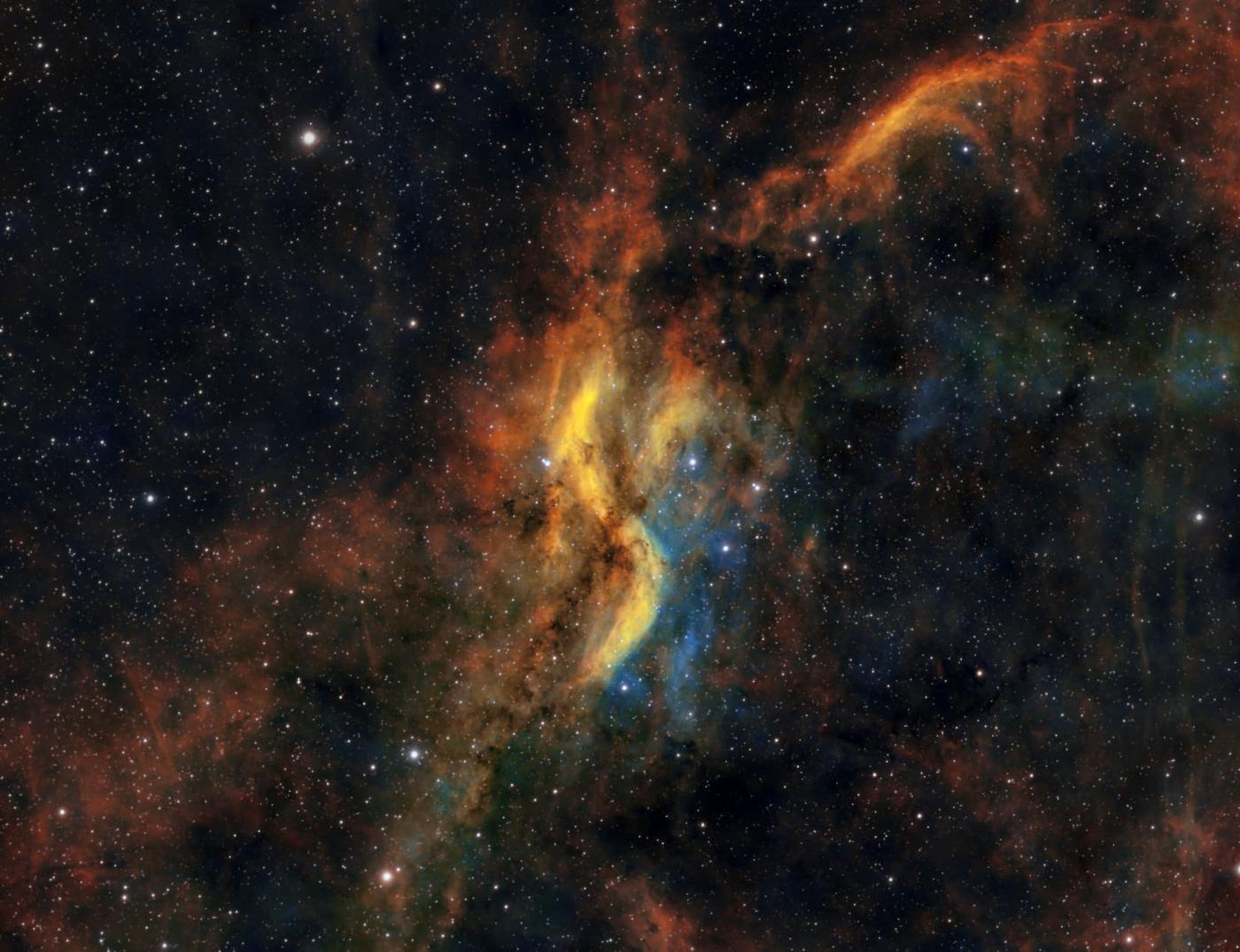
The Sun feels enormous when it’s beating down on you in August. But put it next to some of the stars scattered around our galaxy, and our supposedly mighty Sun starts looking like the sensible family car parked at a supercar convention.
The weird part isn’t just how much bigger or brighter other stars can get. It’s how completely they can break your intuition about what a star should be.
Size Gets Ridiculous Fast
1. Some stars could swallow the Sun’s entire neighborhood
UY Scuti is so bloated that if you dropped it where the Sun sits, its outer layers could extend roughly as far as Jupiter’s orbit, depending on the estimate used for its radius. Earth, Mars, and the asteroid belt would all sit inside the star. And yet UY Scuti isn’t especially massive compared with its outrageous size. It has simply expanded into a huge, low-density red supergiant, more cosmic balloon than heavyweight.
2. A teaspoon of neutron star would outweigh a mountain
Some massive stars end their lives by collapsing into neutron stars, objects that squeeze roughly a star’s worth of mass into a sphere about the size of a city. Their matter gets so compressed that a teaspoonful could weigh around a billion tons on Earth. The Sun will never do this. It’s too lightweight. Our star will eventually leave behind a white dwarf, which suddenly sounds like a very polite retirement plan.
3. The hottest stars make sunlight look chilly
The Sun’s visible surface sits at roughly 5,500°C. That sounds untouchably hot until you meet stars with surface temperatures above 30,000°C, while some exceptionally hot stellar objects climb far higher. These stars shine blue rather than yellow-white because hotter objects throw more energy toward shorter wavelengths. There’s a catch, though. Extreme heat burns through stellar fuel quickly, so many of these monsters live dramatically shorter lives than the Sun.
Brightness Stops Making Sense
4. Some stars shine millions of times brighter than the Sun
Eta Carinae contains one of the most luminous stellar systems in our galaxy, with total output measured in millions of Suns. In the 1840s, it erupted so violently that it briefly became one of the brightest stars in Earth’s night sky despite sitting about 7,500 light-years away. It survived. The eruption blasted enormous amounts of material into space, creating the Homunculus Nebula that now surrounds the system like evidence from a cosmic crime scene.
5. Some stars pulse like enormous beating hearts
Cepheid variable stars repeatedly expand, contract, brighten, and dim on remarkably regular schedules. Better yet, astronomers discovered that a Cepheid’s pulse period reveals its true brightness. Compare that with how bright it looks from Earth, and you can calculate its distance. That relationship helped astronomers measure distances beyond our immediate stellar neighborhood. So a star physically swelling and shrinking became one of humanity’s best measuring tapes for mapping the universe.
6. There are stars that barely shine at all
At the opposite extreme sit red dwarfs, small stars that can have less than a tenth of the Sun’s mass and emit only a tiny fraction of its light. You might assume that makes them rare or unsuccessful. Nope. Red dwarfs appear to be the most common stars in the Milky Way. They sip their hydrogen so slowly that the smallest could keep shining for trillions of years, far longer than the universe has existed so far.
Some Stars Refuse to Behave
7. A day on some stars lasts only hours
Stars rotate, and a few take that job much more seriously than the Sun, which needs roughly a month to turn once near its equator. Some stars complete a rotation in less than a day. Extreme rotation can physically distort a star, making its equator bulge outward while its poles flatten. Spin fast enough and the equator can even become cooler and dimmer than the poles. At that point, “round glowing ball” stops being a particularly accurate description.
8. Some stars are escaping the galaxy
Hypervelocity stars travel so fast that the Milky Way’s gravity may fail to keep them around. Some exceed 1,000 kilometers per second. Astronomers think encounters involving binary stars and the supermassive black hole at our galaxy’s center can provide the necessary kick, flinging one star outward at absurd speed. The Sun cruises around the Milky Way in a fairly stable orbit. These stars are doing something closer to a permanent high-speed exit.
9. Some dead stars flash like cosmic lighthouses
When certain massive stars collapse, they leave behind rapidly spinning neutron stars with powerful magnetic fields. We call these pulsars. Beams of radiation shoot from their magnetic poles, and as the star spins, those beams can sweep past Earth with astonishing regularity. Some pulsars rotate hundreds of times every second. The fastest known examples spin so quickly that a kitchen blender starts looking lazy, despite the star packing more mass than the Sun into city-sized dimensions.
The Sun’s Best Trick Is Being Boring
10. Some stars may outlive the Sun by trillions of years
Our Sun has existed for about 4.6 billion years and has roughly another 5 billion years of normal hydrogen-burning life ahead. That’s impressive until you compare it with the smallest red dwarfs. Because they burn fuel slowly and efficiently, models suggest some could survive for trillions of years. None has died naturally yet because the universe, at 13.8 billion years old, simply hasn’t been around long enough to see it happen.
The Sun starts looking pretty ordinary once you meet the galaxy’s giants, speed demons, stellar corpses, and near-immortal red dwarfs. Share this with someone who still thinks the Sun is showing off.

Devon Walker
Author at SofaBreak — writing on facts and everyday curiosities.