The Real Reason Paper Cuts Hurt More Than Wounds That Are Twice as Deep
You can slice your finger on a sheet of paper, stare at the tiny cut, and wonder how something so small suddenly feels like a personal attack.

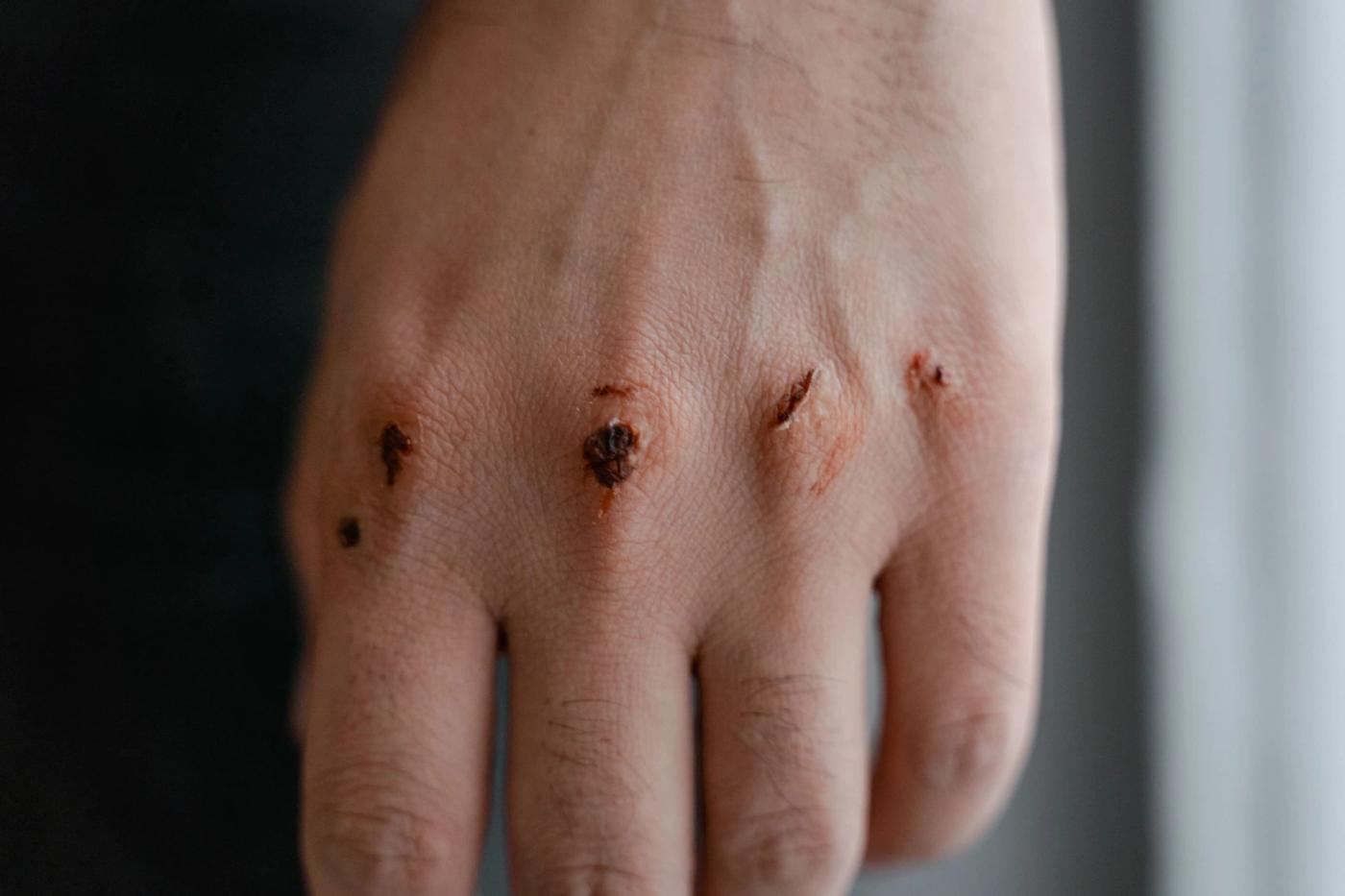
You can slice your finger on a sheet of paper, stare at the tiny cut, and wonder how something so small suddenly feels like a personal attack. Then you remember the time you scraped your knee or nicked yourself while cooking, and somehow those bigger injuries didn't sting nearly as much. The reason has less to do with size than with where, how, and what actually caused the damage.
1. Your fingertips pack an unbelievable number of nerves
Your fingertips rank among the most sensitive parts of your body. They contain thousands of nerve endings that help you feel tiny textures, grip objects, and type without looking. That sensitivity works against you when paper slices the skin. Even a cut that's only a few millimeters long can fire off a flood of pain signals because it happens in one of the most nerve-dense places you have.
2. Paper cuts happen at exactly the wrong depth
A deep knife wound often slices cleanly through layers of skin. A paper cut usually stays much closer to the surface, where many pain receptors sit waiting. That means the injury doesn't destroy the nerves outright. Instead, it leaves them exposed and irritated. You end up with a tiny wound that keeps sending loud pain messages long after the initial slice.
3. The edge of paper isn't actually smooth
A sheet of printer paper feels soft until you look at its edge under a microscope. Instead of a perfectly straight blade, you'll find tiny fibers and rough, uneven ridges. Those microscopic jagged points tear through your skin rather than making one clean slice. Picture a miniature saw instead of a razor. Your skin definitely notices the difference.
4. Air keeps irritating the wound
The moment a paper cut opens your skin, the exposed nerve endings meet the outside world. Air, changes in temperature, soap, and even water can trigger fresh waves of discomfort. That's why the cut often hurts again every time you wash your hands or reach into your pocket. The injury stays small, but the irritation keeps coming back.
5. Your hands never get a break
Think about how often you use your fingers. You text, open doors, carry coffee, scratch your nose, and tap on keyboards hundreds of times a day. Every movement stretches the skin around the cut just a little. Because the wound never gets much rest, it can stay sore longer than a bigger injury on your arm or leg.
6. Tiny cuts don't always bleed enough
Bleeding sounds bad, but it actually serves a purpose. Blood helps wash away dirt and starts the healing process. Many paper cuts barely bleed because they're so shallow. That leaves small bits of paper fiber or dust trapped near the surface, where they can irritate the skin. Sometimes the cut feels worse simply because it never got that natural rinse.
7. Dry paper makes the damage worse
Fresh paper from a printer or notebook doesn't carry much moisture. As it slices into your skin, the dry fibers can pull at the edges of the wound instead of gliding through cleanly. That creates a rougher injury than you might expect. It's one reason cardboard cuts often hurt too. Dry, fibrous materials don't play nice with skin.
8. Your brain pays extra attention to hand injuries
Your brain dedicates a surprisingly large amount of processing power to your hands because you rely on them for almost everything. That means pain from your fingers grabs your attention faster than pain from many other body parts. A tiny paper cut can interrupt your focus immediately, while a larger scrape somewhere else barely registers until you notice it later.
9. Healing can actually make it sting more
You'd expect the pain to fade as soon as the healing starts. Instead, the opposite often happens for a day or two. Your immune system sends cells to repair the damaged tissue, and that creates inflammation. The area becomes extra sensitive while new skin forms. If you've ever wondered why yesterday's paper cut suddenly hurts today, that's usually the reason.
10. The pain fades quickly, but your memory doesn't
Paper cuts rarely cause serious harm, yet almost everyone remembers them. That's because your brain links sharp, unexpected pain with situations worth avoiding in the future. After enough painful encounters, you start handling paper just a little more carefully without thinking about it. Your brain turns a tiny sting into a lesson, which explains why paper cuts seem much more dramatic than they really are.
The next time a tiny slice of paper makes you wince, you'll know your body isn't overreacting. Your fingertips, nerves, and brain simply treat that little cut like a much bigger event. Share this with someone who still insists paper cuts shouldn't hurt that much.

Mia Carter
Author at SofaBreak — writing on facts and everyday curiosities.