Why Lo-Fi Music Became the Soundtrack of an Entire Generation
Somewhere between the unfinished assignment, the 17 open browser tabs and the coffee you forgot to drink, a soft hip-hop beat starts playing.


Somewhere between the unfinished assignment, the 17 open browser tabs and the coffee you forgot to drink, a soft hip-hop beat starts playing. There are no lyrics demanding your attention, no huge chorus and usually no obvious star behind it. Yet lo-fi has become one of the defining sounds of online life, particularly for a generation that needs help concentrating in a world designed to interrupt them.
The YouTube Stream That Never Really Ends
Lo-fi hip-hop existed long before YouTube put an anime girl at a desk. Producers had been combining dusty samples, relaxed beats and deliberately imperfect production for years, drawing heavily from instrumental hip-hop and artists such as J Dilla and Nujabes.
But the format found its perfect home online.
The YouTube channel now called Lofi Girl launched its famous continuous study stream in 2017, originally under the ChilledCow name. Its illustrated student, headphones on and endlessly working beside a window, became so recognisable that you probably know the image even if you couldn't name the channel.
The concept is almost comically simple: mellow instrumental music plays continuously while an animated character studies. But simplicity is exactly why it works. You don't have to choose an album, follow an artist or decide what mood you're in. You click, and the room suddenly has a soundtrack.
That matters when you're trying to work. Spotify gives you millions of choices. TikTok can swallow 40 minutes before you've noticed. A lo-fi stream asks almost nothing from you.
And for millions of listeners, that became the point.
Why Imperfection Sounds So Comfortable
Listen closely and lo-fi often contains things producers traditionally tried to remove.
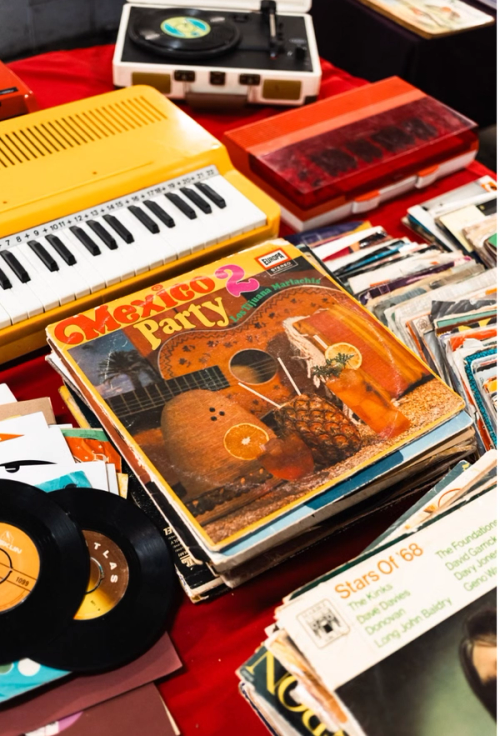
There's vinyl crackle. Tape hiss. Muted drums. Samples can sound slightly worn or distant, while melodies repeat without building toward some enormous payoff. Even the name comes from "low fidelity", referring to recordings where imperfections remain audible.
Those imperfections give the music texture without making it demanding.
Compare that with putting on a favourite pop song while writing. The chorus arrives and your brain knows every word. Suddenly you're mentally performing the song instead of finishing paragraph four. Lo-fi usually avoids that problem because vocals are limited, fragmented or absent altogether.
Its musical roots also run deeper than the study-playlist era suggests. Japanese producer Nujabes, who died in 2010, mixed hip-hop beats with jazz samples and atmospheric melodies throughout the 2000s. His work on the anime series Samurai Champloo, which premiered in 2004, helped introduce that warm, reflective sound to listeners who might never have gone searching through instrumental hip-hop records.
J Dilla's hugely influential Donuts, released in 2006, approached sampling differently but reinforced another idea central to modern beat culture: a short instrumental can have personality without needing a vocalist standing in front of it.
Lo-fi inherited that freedom, then made it useful.
The Timing Couldn't Have Been Better
The genre's online rise happened alongside a major change in how younger adults worked and studied.
Laptops became classrooms. Bedrooms became offices. Headphones became a way of creating a private space inside shared apartments, libraries, cafés and open-plan workplaces. Then the COVID-19 pandemic arrived in 2020 and collapsed those boundaries even further.
Lo-fi fit that environment almost suspiciously well.
It offered company without conversation. You could leave a stream running for three hours and never worry about what came next. And because many playlists used recurring visual themes such as rainy windows, late-night bedrooms, cafés and quiet city streets, listening became partly about creating an atmosphere around whatever boring thing you actually needed to finish.
That's also why calling lo-fi simply "background music" misses something.
For a lot of listeners, it's closer to environmental design. You can't always control whether your neighbour starts drilling into a wall or whether your phone lights up every six minutes. But you can put on headphones and make your immediate surroundings feel calmer.
The music became functional without sounding clinical. That's a difficult balance.
Nostalgia for a Place You Never Lived
There's another reason lo-fi stuck around: it looks backward while living entirely on modern platforms.
The sound often borrows from old jazz records, analogue recording textures and boom-bap hip-hop. The artwork leans toward anime, cassette players, record shops, rainy streets and bedrooms glowing under desk lamps. Much of it evokes an earlier media world, even when the listener was born after that world had largely disappeared.
You get nostalgia without needing a specific memory.
That combination makes sense for people who grew up during the transition from physical media to infinite digital access. Someone born in 1998 could spend childhood with DVDs and an iPod, adolescence on YouTube and adulthood surrounded by algorithmic feeds. Lo-fi takes the convenience of streaming and wraps it in the emotional texture of something older and slower.
Even the repetition helps. Most online entertainment is fighting desperately for your attention. Lo-fi is comfortable with being ignored for a while.
There aren't many corners of the internet willing to do that.
Why You Should Care
You don't need to know a single producer to understand lo-fi's influence. It changed the idea of what music can be for: not necessarily the main event, but a tool for studying, working, reading or making a noisy room feel slightly more manageable.
And if you've ever opened a "beats to study to" playlist before answering emails, you've already participated in one of the internet era's strangest music movements. No ticket required.
What to Watch, Read or Play Next
Start with Samurai Champloo (2004) if you want to hear how hip-hop and anime were being blended before the lo-fi study-stream boom. Nujabes' contributions make the soundtrack almost as important as the sword fights.
Then listen to J Dilla's Donuts (2006). It isn't a lo-fi study album, and treating it as one undersells it, but you can hear why generations of beatmakers became obsessed with texture, sampling and instrumentals that feel complete without vocals.
Finally, spend some time with Lofi Girl's live stream. Don't approach it like an album you're supposed to analyse. Put it on while you've got something else to finish.
That's the clever part of lo-fi. A generation surrounded by media engineered to make you stop whatever you're doing and look at the screen embraced music that quietly gives your attention back.

Ira kapoor
Author at SofaBreak — writing on media news and everyday curiosities.