10 Numbers That Should Not Exist But Somehow Do
Some numbers feel so wrong that your brain wants to reject them on sight. You learn the rules of math in school, settle into the idea that numbers behave themselves, and move on with your life

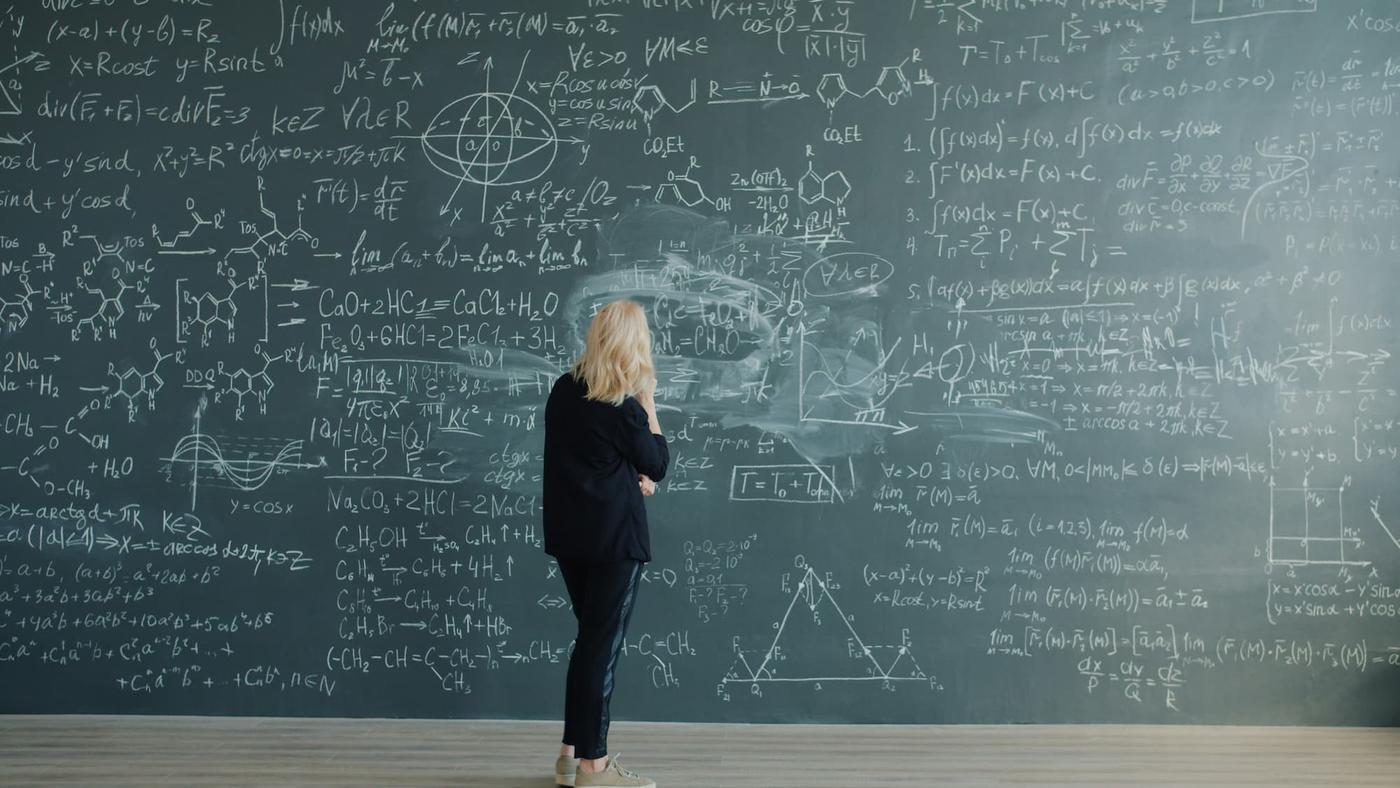
Some numbers feel so wrong that your brain wants to reject them on sight. You learn the rules of math in school, settle into the idea that numbers behave themselves, and move on with your life. Then you stumble across the weirdos, numbers that break expectations so completely that they sound made up yet sit at the heart of modern science and technology.
1. Zero Was Once Considered Dangerous
Zero seems harmless now. You use it every day without thinking twice. But ancient civilizations struggled with the idea that "nothing" could count as something. Even after Indian mathematicians embraced zero as a number, some scholars in medieval Europe viewed it with suspicion. Merchants worried it could enable fraud. Today, your bank account, computer, and phone rely on zero constantly. Without it, modern math collapses like a house of cards.
2. Negative Numbers Were Called Absurd
Imagine telling someone that you have negative three apples. Early mathematicians had exactly that reaction. For centuries, they treated negative numbers as nonsense because you couldn't physically hold less than nothing. Chinese scholars used them in accounting long before Europe accepted them. Even then, many experts dismissed them as fake. Now, they help you track debt, temperatures below freezing, and changes in elevation without anyone blinking an eye.
3. Pi Never Stops
Most people know pi as 3.14. That's cute, but wildly incomplete. Pi stretches forever without repeating a pattern. Computers have calculated trillions of its digits, yet nobody has found an ending. The unexpected part? Engineers rarely need more than a handful of digits to build bridges or send spacecraft through the solar system. Humanity keeps chasing more anyway, partly because we're stubborn and partly because we can't resist a challenge.
4. The Square Root of Minus One Exists
Ask someone to calculate the square root of negative one, and they'll probably tell you it's impossible. In everyday arithmetic, they're right. Mathematicians solved the problem by creating an entirely new category called imaginary numbers. The symbol "i" represents this impossible value. Despite the dramatic name, imaginary numbers power very real things, including electrical engineering, signal processing, and the technology behind MRI scans.
5. Infinity Behaves Like a Number
Infinity sounds more like philosophy than mathematics. Yet mathematicians treat different sizes of infinity as serious business. Here's the strange part: some infinite collections contain more members than others. You can match every whole number with an even number and never run out, even though the even numbers seem smaller. But the infinity of real numbers turns out to be larger still. Infinity has layers, and that idea still makes people's heads spin.
6. Graham's Number Is Too Big to Imagine
Graham's Number arrived through a real mathematical problem, not a science fiction novel. It's so enormous that writing it in ordinary notation would exceed the number of atoms in the observable universe. Even the number of digits in Graham's Number becomes impossible to picture. Yet mathematicians know certain facts about it, including its final digits. Somehow, they can study a number nobody could ever fully write down.
7. 0.999... Equals 1
This one starts arguments at dinner tables. Your instincts probably insist that 0.999 repeating falls just short of 1. Mathematics disagrees. Those repeating nines actually equal exactly 1. Different proofs reach the same conclusion, and they don't leave wiggle room. The shock comes from realizing that numbers can have multiple representations. You haven't discovered a loophole in math. You've discovered that intuition sometimes takes the scenic route.
8. e Shows Up Everywhere
The number e, roughly 2.71828, rarely gets the celebrity treatment that pi enjoys. That's unfair because e quietly runs huge parts of the natural world. It appears in population growth, radioactive decay, compound interest, and probability. If something grows or shrinks continuously, e often sneaks into the equation. Banks use it. Scientists use it. Chances are, you've benefited from it without ever learning its name.
9. Prime Numbers Become Unpredictable
Prime numbers only divide evenly by themselves and one. Simple enough. But nobody has discovered a neat formula that predicts exactly where the next prime will appear. They pop up in patterns that feel random and structured at the same time. Ancient mathematicians obsessed over them. Modern cryptography depends on them. Every secure online purchase you make owes a quiet debt to these stubborn numerical rebels.
10. There Are Numbers Smaller Than Small
You probably think numbers eventually hit zero and stop. Calculus introduced another strange idea: infinitesimals, values smaller than any ordinary positive number but still greater than zero. Philosophers and mathematicians fought bitterly over whether these quantities truly existed. Today, versions of the concept help explain motion and change. The math works beautifully, even if the numbers themselves still feel like they slipped in through a side door.
Math has a reputation for being cold and predictable. But hidden beneath the formulas sits a collection of ideas so strange that they sound like plot twists. Share this with someone who thinks numbers are boring, then wait for the inevitable argument about 0.999 repeating.

Devon Walker
Author at SofaBreak — writing on facts and everyday curiosities.