Why Ancient Civilizations Were Smarter Than We Give Them Credit For
You probably picture ancient people fighting with sticks, guessing how the stars worked, and dying because someone sneezed

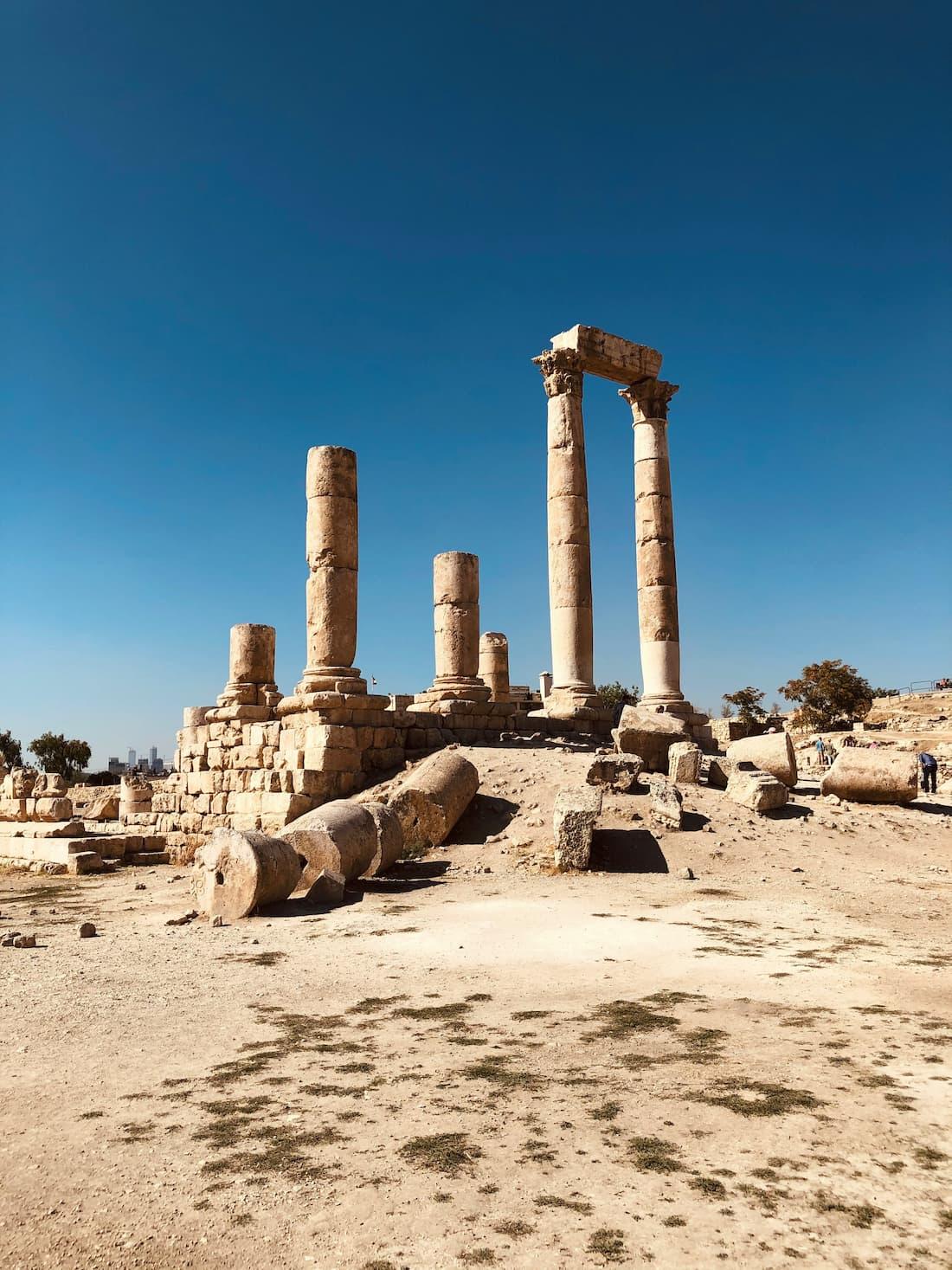
You probably picture ancient people fighting with sticks, guessing how the stars worked, and dying because someone sneezed. That version falls apart pretty quickly once you look closer. Some ancient civilizations solved problems so well that modern researchers still argue about how they pulled certain things off.
1. Ancient Egyptians built things with absurd precision
The pyramids don't just look impressive from far away. The base of the Great Pyramid sits almost perfectly aligned with true north, with an error so small you could miss it with modern equipment. Workers moved multi-ton stones without cranes or engines. And yes, they also built ramps, canals, and supply systems because giant projects need logistics, not magic.
2. Romans created concrete that outlived modern versions
You know those Roman buildings still standing after nearly 2,000 years? Their concrete helps explain why. Roman builders mixed volcanic ash with lime, creating a material that actually grows stronger when seawater hits it. Some modern concrete cracks within decades. Meanwhile Roman harbors keep sitting there like they have something to prove.
3. Ancient surgeons performed brain surgery successfully
People drilled holes into human skulls thousands of years ago. That sounds terrifying until you learn many patients survived. Archaeologists found skulls from places like ancient Peru showing clear healing around surgical openings. Some survival rates may have beaten certain procedures from much later periods. Imagine getting brain surgery with stone tools and still walking home afterward.
4. The Maya tracked time with scary accuracy
The Maya didn't just create calendars. They built multiple calendar systems and tracked astronomical cycles with accuracy that still surprises researchers. Their calculations for the solar year came extremely close to modern measurements. They also mapped movements of planets without telescopes. Most people struggle to remember what day garbage collection happens.
5. People crossed oceans long before most assume
Ancient sailors navigated huge distances using stars, ocean currents, birds, and wave patterns. Polynesian navigators crossed massive sections of the Pacific without GPS, compasses, or satellite maps. Some experts compare this skill to astronaut-level navigation because getting lost in the open ocean gives you very few chances to correct mistakes.
6. Ancient cities had plumbing you would actually want
Parts of the ancient world handled water better than you'd expect. The people of the Indus Valley built planned cities with drainage systems, standardized bricks, and household bathrooms thousands of years ago. Some homes connected directly to sewage systems. Plenty of modern cities around the world still struggle with infrastructure on that scale.
7. Greeks built something close to an ancient computer
Divers discovered a strange lump inside a shipwreck in the early 1900s. Turns out, it contained gears. Lots of gears. Researchers later realized the object, now called the Antikythera Mechanism, could predict astronomical positions and eclipses. Think of it as a hand-powered analog computer from more than 2,000 years ago. Nobody expected ancient ship cargo to include precision machinery.
8. Ancient people understood psychology better than you'd think
Rulers, merchants, and religious leaders figured out human behavior early. Ancient markets used scarcity tactics, social pressure, branding, and emotional storytelling because humans haven't changed much. The Romans designed public spaces to influence crowds. Egyptian monuments projected power on purpose. Turns out manipulating attention existed long before social media discovered notification badges.
9. Farmers engineered food systems that still work
Ancient farming often looked more advanced than "put seed in dirt and hope." Farmers built terraces into mountainsides, created irrigation networks, and developed crop rotation systems that supported huge populations. The Aztecs even created floating agricultural platforms called chinampas. Some produced harvests so efficiently that researchers still study them for sustainable farming ideas.
10. They solved problems without the shortcuts we rely on
This might be the strangest part. Ancient civilizations accomplished huge engineering, medical, and scientific breakthroughs without calculators, electricity, search engines, or industrial machines. They relied on observation, repetition, mathematics, and lots of trial and error. You can argue they lacked modern technology. You can't argue they lacked intelligence.
Ancient people weren't primitive humans waiting for progress to happen. They were people solving hard problems with fewer tools than you have in your pocket. Share this with someone who still thinks history peaked when Wi-Fi arrived.

Craig Anderson
Author at SofaBreak — writing on facts and everyday curiosities.